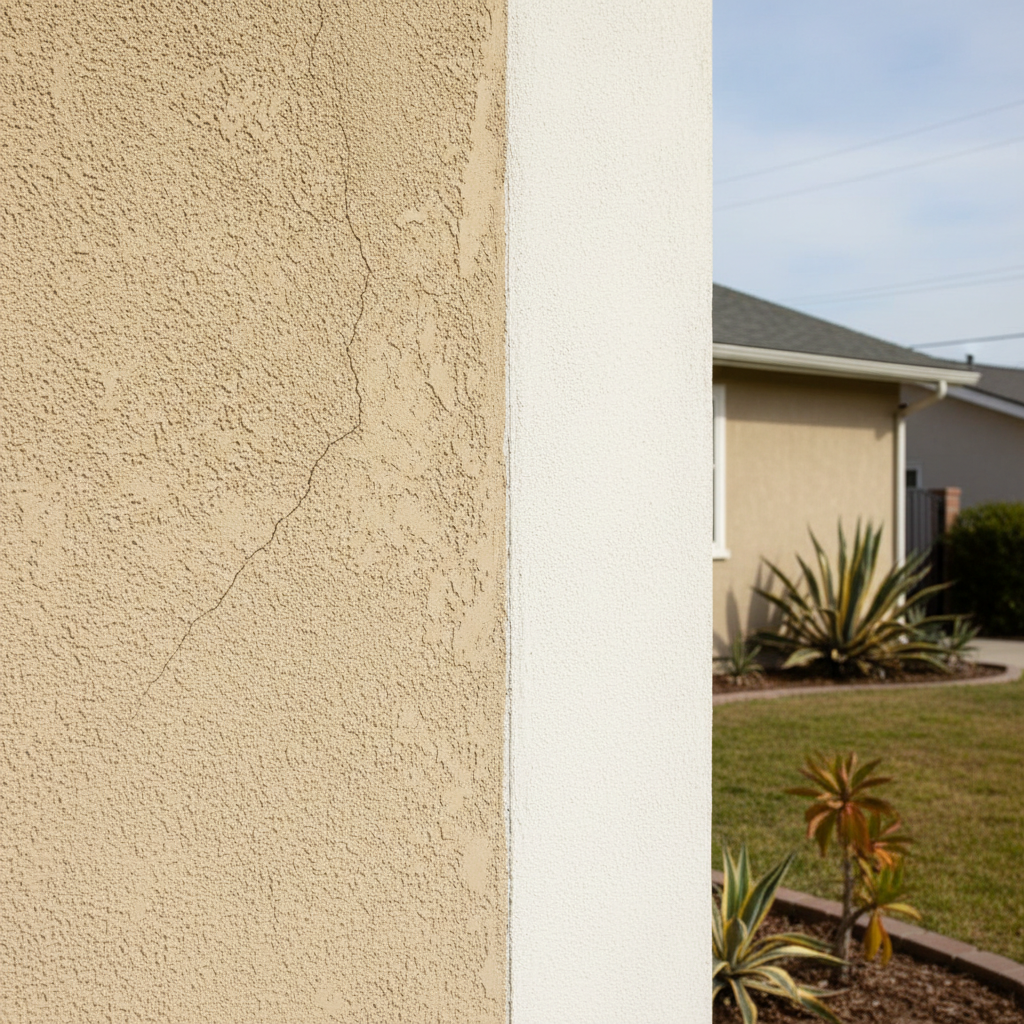
Alright, let's talk stucco replacement. If you own a home in Norwalk, you know that Southern California sun really puts our houses through their paces. When your stucco starts looking tired, you've generally got two main choices for replacement: the classic, traditional stucco, or what some folks call 'synthetic stucco,' which is actually EIFS (Exterior Insulation and Finish System). I've been doing this work for a long time right here in Norwalk, and I've seen both systems in action. So, here's my honest take on what you should know to pick the right one for your place.
Cost: What's This Going to Set You Back?
Let's just get right to it: money. Nobody wants to spend more than they have to, but you also don't want to skimp and then wish you hadn't. Generally speaking, traditional stucco will be a bit cheaper upfront. For a standard residential job, you're probably looking at somewhere around $6 to $12 per square foot.
EIFS, on the other hand, usually costs a little more, typically running from $8 to $15 per square foot once it's installed. Why the difference? Well, EIFS materials are often more specialized, and putting it in needs a very particular set of skills to make sure the drainage and flashing are absolutely perfect. Don't let that initial price tag totally scare you off, though; sometimes, the money you save in the long run, especially with energy efficiency, can balance it out.
Durability: How Tough Is This Stuff?
When it comes to holding up against the weather, both options have their good points. Traditional stucco is a rigid, cement-based material. It's incredibly tough and can really take a hit. If a kid's bike or a runaway trash can bumps your wall, traditional stucco is much less likely to dent or get punctured. It's been around for centuries, and when it's installed correctly, it can last a good 50 to 80 years.
EIFS is different. It's a layered system with an insulation board underneath, and its top finish coat is more flexible. This flexibility means it won't get those tiny hairline cracks you often see with traditional stucco as a house settles or temperatures change. But that flexibility has a downside: EIFS isn't as good at handling impacts. A sharp blow can dent or puncture that insulation layer. Newer EIFS systems have better impact resistance, but it's still something to keep in mind.
Maintenance: What Kind of Upkeep Are We Talking About?
No exterior finish is completely maintenance-free, but some need more attention than others. Traditional stucco is pretty low-key, honestly. You'll want to keep it clean, and eventually, you'll see some cracks. That's just how it is with a rigid, cement-based material, especially with our temperature swings here in Norwalk. When those cracks pop up, you'll need to patch them to stop moisture from getting in. Repainting or re-finishing is pretty straightforward when the time comes.
EIFS generally has lower maintenance costs over time because its flexibility helps it resist cracking. It's also designed to repel moisture. However, if EIFS does get damaged, especially from an impact, fixing it can be a bit more complicated and requires specialized care to make sure the system stays sound. For both systems, you'll still need to check and maintain caulk joints, flashing, and sealants to get their full lifespan.
Appearance: What Look Are You Hoping For?
Both options can make your home look fantastic, but they do it in different ways. Traditional stucco gives you that classic, hard, masonry appearance that's so common all over California. You can choose from various textures, from super smooth to sand, dash, or even a Santa Barbara finish. It's a timeless style many homeowners really love.
EIFS offers a lot more design freedom. Because it's light and flexible, you can mold it into almost any shape, allowing for intricate architectural details like arches, columns, or decorative bands. It also comes in a huge array of colors and can even mimic other materials like brick or stone. To someone who isn't an expert, EIFS can look exactly like traditional stucco, but EIFS gives you more creative options if you're looking for something beyond the usual textures.
My Recommendation for Norwalk Homeowners
Here in Norwalk, we've got a mild Mediterranean climate. We get warm, dry summers and cool, wet winters, but nothing too crazy. The sun beats down hard most of the year, and even though we don't get snow, those occasional heavy rains and temperature shifts mean your home's exterior really needs to be tough and well-sealed.
Considering our local conditions and what I've seen work best over the years, my clear recommendation for most homeowners in Norwalk is to go with traditional three-coat stucco for replacement. Here's why:
- Proven Durability: It's a rigid, impact-resistant material that holds up beautifully to our hot, dry summers and stands strong against general wear and tear. You don't have to worry as much about accidental punctures, which is nice.
- Cost-Effective: While EIFS does offer energy benefits, the upfront cost of traditional stucco is often lower, and its long lifespan means you get excellent value.
- Ease of Repair: When cracks inevitably show up (and they will, it's a natural material, after all), traditional stucco is generally easier and less specialized to patch and repair correctly. This is a big deal for long-term maintenance.
- Familiarity: It's what's on a lot of homes around here, and local contractors like us at Norwalk Stucco & Plastering know it inside and out. We really understand how it performs in our specific climate.
Now, EIFS isn't a bad product, especially if energy efficiency is your absolute top priority or you want very specific architectural details. It provides excellent insulation, which can mean lower energy bills. But for the typical Norwalk home, where impact resistance and straightforward, long-term durability are key, traditional stucco is usually the smarter, more reliable choice. It's a solid investment that'll protect your home for decades to come.