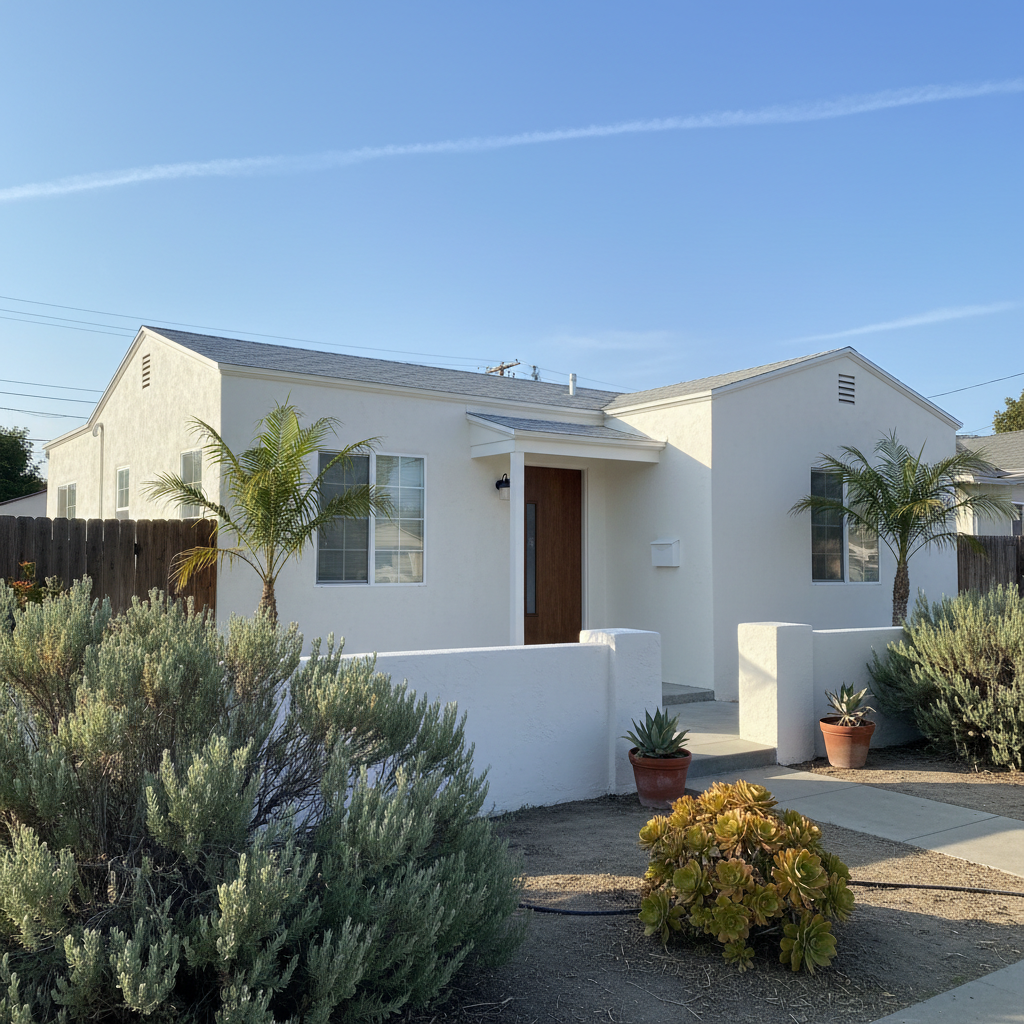
Alright, let's cut to the chase about painting your stucco house here in Norwalk. It's not just about slapping on a new color; there's a whole lot that goes into getting a quality, long-lasting finish. I've seen plenty of jobs done right, and unfortunately, a few done wrong, so I want to give you the straight scoop on what you can expect to pay and why.
What Makes Stucco Painting Cost What It Does?
You'd think it'd be simple, right? Just paint a house. But stucco's a different beast than wood siding, and several big factors really drive the price up or down. Here's what we look at:
- The Size of Your Home: This is the most obvious one. A 1,200 sq ft ranch home in the Carmenita area will cost less to paint than a two-story, 2,500 sq ft house near the Norwalk Town Square. More surface area means more paint, more labor, and more prep time, plain and simple.
- Condition of Your Existing Stucco: This is huge. If your stucco is cracked, has efflorescence (those white powdery salt deposits), or needs repairs before painting, that's extra work. We can't just paint over damage; it'll show through and fail quickly. Patching cracks, cleaning mildew, or even re-stuccoing small sections adds to the labor and material costs.
- Type of Paint Used: Not all paints are created equal, especially for stucco. You'll want a high-quality elastomeric or acrylic latex paint designed for masonry. These paints are flexible, breathable, and stand up to our Southern California sun and occasional rain much better. Cheaper paints might save you a buck upfront, but they'll peel and fade faster, costing you more in the long run.
- Number of Colors: Most folks go with one main body color and maybe a trim color. If you're looking for multiple accent colors, intricate detailing, or different shades on different architectural features, that's more masking and more time.
- Accessibility: Is your house easy to get around? Are there lots of bushes, fences, or tight spots? Will we need extensive scaffolding or specialized lifts for high peaks? The harder it is to reach, the more time and equipment it takes.
- Prep Work, Prep Work, Prep Work: I can't stress this enough. The quality of the prep work dictates the quality and longevity of the paint job. This includes power washing, scraping loose paint, repairing stucco, patching holes, caulking around windows and doors, and extensive masking. If a quote seems too low, it's often because they're cutting corners on prep. Why would you want that?
Typical Stucco Painting Cost Ranges in Norwalk, CA
Alright, let's get down to some actual numbers. Keep in mind these are averages for a quality job using good materials, not the cheapest guy with a brush. For a typical stucco home in Norwalk, you're generally looking at:
- Small Homes (1,000 - 1,500 sq ft): Expect to pay somewhere between $4,000 and $7,000. This assumes decent stucco condition and standard colors.
- Medium Homes (1,500 - 2,500 sq ft): For this size, you're usually in the range of $6,500 to $12,000. Again, condition is a big factor here.
- Larger Homes (2,500+ sq ft): For bigger properties or those with more complex architectural details, you could be looking at $10,000 to $20,000+.
These numbers include labor, materials (paint, primer, caulk, masking tape, etc.), and the necessary prep work. If your stucco needs significant repairs before painting, like major crack filling or re-dashing, those costs will be added on top.
What Should a Good Quote Include?
When I give a quote for Norwalk Stucco & Plastering, I make sure it's clear. Here's what you should expect to see detailed:
- Detailed Scope of Work: This should list everything they're going to do. Power washing, stucco repair (with specifics if possible), priming, number of paint coats, trim painting, door painting, etc.
- Materials Specified: The brand and type of paint and primer they plan to use. Don't settle for