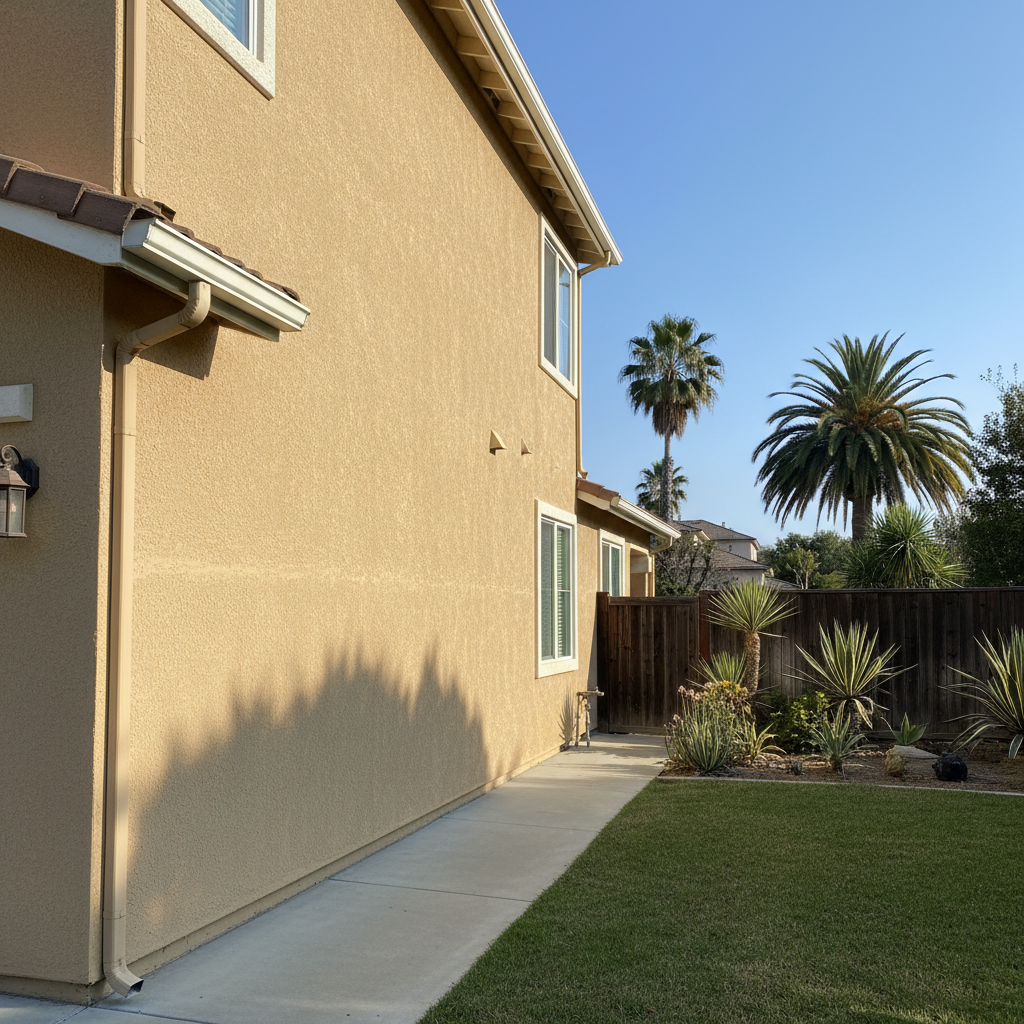
Alright, let's talk about stucco. It's on your Norwalk home for a good reason – it's tough, looks good, and handles our local climate pretty well, doesn't it? But "tough" doesn't mean "bulletproof." Just like anything else, your stucco needs a little TLC to keep doing its job right, especially with those hot, dry summers and the occasional heavy downpour we get around here.
Extend Your Stucco's Lifespan: My Best Advice
You want your stucco to last, right? Good. Because with the right care, it can go for decades, sometimes even outliving the house itself. Here's what I tell folks in Norwalk:
- Keep it Clean: This is probably the easiest thing you can do. Stucco's a bit porous, so it can grab onto dirt, dust, and even some of that exhaust from the 5 freeway. Give it a good rinse with a garden hose a couple of times a year. For tougher grime, a mild detergent and a soft brush will do the trick. If you're thinking about pressure washing, be careful! Keep the pressure low (under 1,500 psi) and the nozzle at least two feet away. You really don't want to blast the finish right off.
- Seal it Up: The sealants around your windows, doors, and any penetrations (like pipes or vents) won't last forever. Our intense sun can really bake them. Check these areas every year. If you see cracking, shrinking, or gaps, re-caulk them. This is crucial for keeping water out.
- Mind Your Landscaping: Keep plants, bushes, and even soil at least 4 inches away from the bottom of your stucco, where it meets the ground (that's called the weep screed). If concrete patios or walkways are against the stucco, you need at least 2 inches of clearance. The weep screed is designed to let any trapped moisture drain out. If it's blocked, water can wick up into your walls and cause big problems.
- Paint Smart: If your stucco is painted, make sure the paint lets it breathe. Stucco needs to release water vapor, and a non-permeable paint can trap moisture. That leads to bubbling, peeling, and even rot in the framing behind it. Use high-performance acrylic or elastomeric coatings that are made for stucco.
Regular Maintenance: Your Annual Stucco Check-Up
Think of this like a yearly physical for your house. Walk around your home at least once a year, maybe in the spring or fall, and give your stucco a good look. What are you looking for?
- Cracks: We'll talk more about these in a minute, but note any new ones.
- Stains or Discoloration: Brown, black, or green streaks can mean water issues or algae. White, chalky deposits (efflorescence) are a sign of moisture moving through the stucco, bringing salts to the surface.
- Soft Spots or Bulges: Gently press on different areas. Stucco should feel firm. Soft or spongy spots are a big red flag.
- Peeling or Bubbling Paint: This often points to moisture trapped behind the paint.
- Gaps: Check around windows, doors, and where different materials meet.
Warning Signs of Trouble: Don't Ignore These
Some things go beyond routine maintenance and are screaming for attention. Don't put these off, especially in our climate where water damage can quickly get serious after a good rain.
- Cracks that are growing: Hairline cracks (less than 1/8 inch) from normal settling or temperature changes are common, but if they get wider, longer, or start branching out, that's a problem.
- Medium to large cracks: Cracks 1/8 to 1/4 inch wide can mean moisture is getting in or your foundation is moving. Anything over 1/4 inch needs immediate professional assessment.
- Water stains that keep coming back: If you clean a stain and it reappears, or if you see consistent dark streaks, especially near windows or rooflines, you've got a water intrusion issue.
- Soft, bulging, or hollow-sounding areas: This indicates water damage to the underlying structure, delamination, or even mold and rot.
- Musty odors inside: If you smell dampness or see bubbling paint or damp drywall inside near an exterior wall, water is getting behind your stucco.
When to Call a Professional: Don't DIY Everything
Look, I'm all for homeowners taking care of their property. But some stucco issues are just too big or too complex for a DIY fix. You need someone who understands the whole system, not just the surface.
You should call a stucco professional like us at Norwalk Stucco & Plastering when:
- You have significant cracks: Anything beyond a hairline crack, especially if it's wide, deep, or running diagonally from windows or doors, needs an expert. This often points to structural issues that a patch job won't fix.
- You suspect water damage behind the stucco: If you see persistent stains, soft spots, or efflorescence, there's likely hidden moisture. We have specialized equipment to detect this and can address the root cause, not just the symptom.
- There's bulging or delamination: This means the stucco is detaching from the wall, and it almost always indicates trapped water and potential framing damage. This requires cutting back the stucco to inspect and repair the underlying issues.
- You need color or texture matching: Getting a seamless repair, especially on older homes, takes a skilled hand and specific materials. We're experts at blending new work with old so it looks like it was always there.
- You're unsure about the problem: If you're scratching your head, or if a small repair you tried didn't hold, it's time to get a professional opinion. Trying to fix complex stucco problems yourself can often lead to bigger, more expensive issues down the road.
Your stucco is a big investment and your home's first line of defense against the elements. Taking care of it means protecting your whole house. Don't hesitate to reach out if you've got questions or see something that doesn't look right. We're here to help keep your Norwalk home looking great and standing strong.